
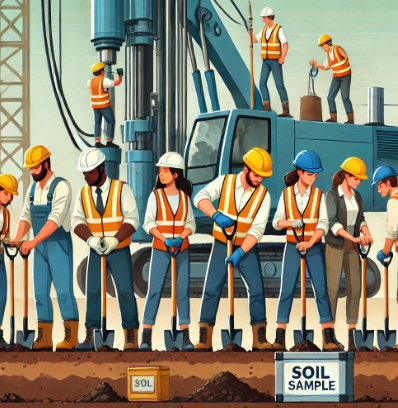
Before starting any construction project, it’s crucial to investigate the site’s soil conditions. Soil quality can significantly impact the foundation’s stability and the overall structural integrity of a building.
Soil Testing: A Crucial Step
To assess soil suitability, engineers conduct various soil tests, including:
- Soil Sampling: Collecting soil samples from different depths to analyze their properties.
- Soil Classification: Categorizing the soil based on its particle size, mineral content, and moisture content.
- Soil Strength Tests: Evaluating the soil’s ability to resist deformation and failure under load.
- Soil Permeability Tests: Measuring the soil’s ability to allow water to pass through it.
Dealing with Unsuitable Soil
If the soil on the site is found to be unsuitable for construction, several options can be considered:
- Soil Replacement:
- Excavation: Removing the unsuitable soil from the construction site.
- Hauling: Transporting the excavated soil to a designated disposal site.
- Importing Suitable Soil: Bringing in soil that meets the project’s requirements.
- Soil Stabilization:
- Chemical Stabilization: Adding chemicals to improve the soil’s strength and stiffness.
- Mechanical Stabilization: Compacting the soil to increase its density and bearing capacity.
- Foundation Modification:
- Deep Foundations: Using techniques like pile foundations or caissons to transfer loads to stronger soil layers.
- Reinforced Concrete Foundations: Increasing the thickness and reinforcement of the foundation to accommodate the weak soil.
Economic Considerations
When deciding on the best approach, it’s essential to consider the economic implications. Factors such as the cost of soil replacement, stabilization, or foundation modification should be carefully evaluated.
By conducting thorough site investigations and making informed decisions about soil treatment or foundation design, engineers can ensure the long-term stability and safety of buildings.
Leave a Reply