
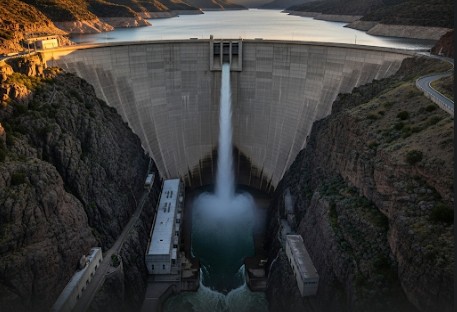
Have you ever wondered how a massive river can be held back to create a calm lake or generate electricity for a whole city? The answer lies in some of the most impressive structures ever built by humans: dams. These giants of engineering are crucial for our survival and progress. They are more than just concrete walls; they are carefully designed systems that manage our most precious resource—water.
Let’s dive into the world of dams, explore the different types, and understand the basic steps involved in building them.
Why Do We Build Dams?
Before we look at the different types of dams, it’s important to know why we need them. Dams serve several vital functions:
- Water Supply: They store water during rainy seasons, creating reservoirs that provide a steady supply of drinking water for our homes and cities all year round.
- Irrigation: Farmers need water for their crops. Dams release water in a controlled way to irrigate vast areas of farmland, helping to grow the food we eat.
- Flood Control: In areas with heavy rainfall, dams can hold back excess water that would otherwise cause dangerous floods downstream, protecting towns and villages.
- Hydroelectric Power: The force of water released from a dam can be used to spin turbines and generate clean, renewable electricity.
- Recreation: The lakes (reservoirs) created by dams are often popular spots for boating, fishing, and swimming.
The Main Types of Dams
Dams are not a one-size-fits-all solution. Engineers choose a specific type based on the landscape, the type of rock in the area, and the dam’s intended purpose. Here are the most common types.
1. Gravity Dams
Imagine trying to stop a door from opening by putting a very heavy box against it. That’s exactly how a gravity dam works. These dams are massive structures, usually made of concrete, that use their sheer weight and size to hold back the force of the water. The immense weight of the dam pushes down on the ground, creating a force that is stronger than the push of the water. They are best suited for wide valleys with strong rock foundations.
2. Arch Dams
An arch is one of the strongest shapes in architecture. Think of an ancient Roman bridge. An arch dam uses this same principle. It is built in a curve that faces upstream, into the water. The pressure of the water pushes against the arch, and the curved shape cleverly directs that force into the rock walls of the canyon or valley on either side. Because they are so efficient at transferring force, arch dams can be much thinner than gravity dams and use less concrete. They are ideal for narrow, rocky gorges.
3. Buttress Dams
A buttress dam is a bit like a combination of the first two. It has a relatively thin wall or face that holds back the water, but it is supported from behind by a series of braces, called buttresses. These buttresses act like strong props, transferring the water’s force down to the foundation. This design requires less concrete than a gravity dam but still provides excellent stability.
4. Embankment Dams
An embankment dam is essentially a giant, man-made hill built across a river. They are the most common type of dam in the world. They are built from compacted earth, sand, clay, and rock. There are two main kinds:
- Earth-fill Dams: Made mostly of compacted earth. They have a waterproof core, usually made of clay or concrete, in the middle to stop water from seeping through.
- Rock-fill Dams: Made from compacted broken rock. Like earth-fill dams, they also have a waterproof core.
Embankment dams are a great choice for wide valleys where the rock foundation might not be strong enough for a heavy concrete dam.
How Are These Giants Built? A Simple Guide to Dam Construction
Building a dam is a massive undertaking that takes years of planning and construction. The general process follows these key steps:
- Site Selection and Preparation: First, engineers and geologists study the area to find the perfect spot. They need strong rock for the foundation and the right valley shape. Once a site is chosen, the area is cleared of trees, soil, and loose rock.
- Diverting the River: You can’t build a dam in a flowing river. So, the construction crew must first divert the water around the worksite. This is often done by building smaller, temporary dams called cofferdams upstream and downstream of the site. The river’s water is then channeled through large tunnels or channels built into the valley walls.
- Building the Foundation: With the construction site dry, workers begin excavating down to solid bedrock. A strong, stable foundation is the most critical part of the dam. Any cracks in the rock are filled with a special grout (a type of cement mixture) to make it watertight and strong.
- Raising the Dam: This is the main construction phase. For concrete dams (gravity or arch), concrete is poured in large, interlocking blocks, often cooled with internal pipes to prevent cracking. For embankment dams, layers of earth and rock are transported to the site, spread out, and compacted with heavy machinery until the desired height is reached.
- Finishing Touches: As the dam gets taller, important features like spillways and outlets are added. A spillway is a large channel, like an overflow drain in a bathtub, that allows excess water to be safely released during floods to prevent the dam from overflowing. Outlets are pipes that allow operators to release water for power generation or irrigation.
Once the dam is complete, the diversion tunnels are sealed, and the river is allowed to slowly fill the area behind the dam, creating the reservoir. Dams are incredible feats of engineering that play a vital role in our modern world, truly holding back the waters for the benefit of all.
Leave a Reply