
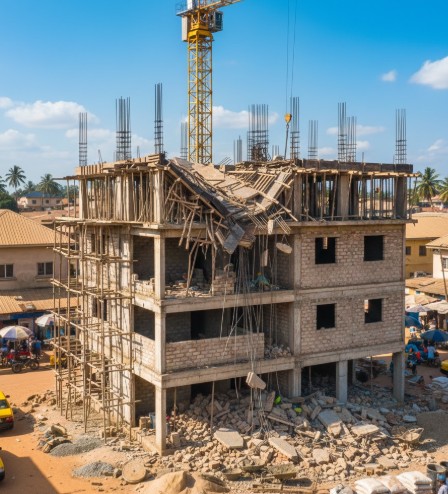
Introduction to the Crisis
Nigeria currently faces a severe structural safety emergency that threatens both lives and investments. Between 2022 and late 2025, the country recorded over 145 incidents of building collapse in Nigeria, resulting in significant fatalities and property loss. While many developers often blame “acts of God” or heavy rainfall for these disasters, the reality is far more technical. Most of these tragedies stem from preventable engineering failures, poor regulatory oversight, and a blatant disregard for safety standards.
This article analyzes the technical root causes behind these failures to help developers, engineers, and homeowners build safely. By understanding why structures fail, we can move toward a future where “building collapse in Nigeria” is no longer a recurring headline. We will examine everything from the ground beneath the structure to the quality of the steel within the columns.
The Danger of Skipping Geotechnical Tests
One of the primary drivers of building collapse in Nigeria is the failure to conduct proper geotechnical (soil) tests. Many developers skip this crucial step to save a small amount of money, usually between ₦150,000 and ₦300,000. This is a fatal mistake because the soil carries the entire weight of the building. Without knowing the soil’s bearing capacity, an engineer cannot design a safe foundation.
Different regions in Nigeria possess unique soil characteristics that dictate foundation types. In coastal areas like Lagos, the ground consists mostly of soft, silty clays and high water tables. These conditions often require Pile Foundations to reach stable ground deep below the surface. In contrast, parts of Northern Nigeria often contain “Black Cotton Soil.” This soil expands when wet and shrinks when dry, which requires specialized Raft Foundations to prevent structural movement.
When a developer ignores soil testing, the foundation may suffer from differential settlement. This occurs when one part of the building sinks faster than another. Consequently, large structural cracks appear, eventually leading to a total building collapse. Investing in a soil test is the only way to ensure the ground can support your dream home.
Using Substandard Building Materials
The use of inferior materials significantly contributes to the frequency of building collapse. The steel reinforcement industry, for instance, faces a major “quackery” problem. Many “local” bars sold in the market do not meet the required diameter specifications. For example, a bar sold as 12mm might actually measure only 10.5mm. This reduction in thickness drastically weakens the structural integrity of beams and columns.
Concrete quality also plays a vital role in structural stability. A common error on Nigerian sites involves adding too much water to a concrete mix to make it more “workable.” While this makes the cement easier to pour, it creates voids in the concrete and reduces its compressive strength. Furthermore, many builders fail to distinguish between cement grades. Using the wrong cement grade for heavy-duty structural elements can lead to premature failure under heavy loads.
Quackery and Professional Negligence
Professional negligence remains a silent killer in the construction industry. Too many developers hire “Foremen” or “Masons” to act as site engineers because they charge lower fees. These individuals lack the deep mathematical and structural understanding required to manage complex projects. Any structural design must be reviewed and stamped by a COREN (Council for the Regulation of Engineering in Nigeria) registered engineer to ensure safety.
Even when a design is perfect, “cutting corners” during the execution stage can cause a building collapse in Nigeria. Contractors sometimes reduce the number of stirrups in a column or use fewer reinforcement bars than the plan specifies. This deliberate deviation from the engineering drawing compromises the building’s ability to handle stress. Professional supervision is not an extra expense; it is a life-saving necessity.
Regulatory Failures and Building Codes
The lack of strict enforcement of the National Building Code (NBC) creates a loophole for unsafe practices. The NBC provides the legal and technical framework for safe construction, but many states have yet to fully adopt or enforce its provisions. This lack of oversight allows developers to bypass safety checks during the most critical phases of construction.
Illegal conversions are another major factor in the building collapse in Nigeria crisis. It is common to see a developer add three extra floors to a building originally designed as a single-story bungalow. The original foundation cannot support this unexpected weight. Without a “change of use” permit and a fresh structural integrity test, these buildings become ticking time bombs in cities like Lagos and Abuja.
The Way Forward
To end the cycle of building collapse in Nigeria, we must adopt a culture of safety over speed. First, every project above a bungalow must undergo mandatory soil testing. Second, state agencies like LASBCA (Lagos State Building Control Agency) must conduct stricter, unannounced site inspections. These agencies should have the power to halt any project that lacks professional supervision or uses substandard materials.
Ultimately, homeowners must realize that building safely is far cheaper than the financial and emotional cost of a collapse. Always hire certified professionals and insist on quality materials for every stage of your project. If you want to learn more about the legal frameworks surrounding construction safety, you can read more about building regulations here.
References
- Akanbi, O. (2024). Structural Integrity and the Nigerian Construction Industry. Journal of Engineering Research.
- COREN. (2025). Annual Report on Building Failures and Professional Misconduct in Nigeria.
- Oloyede, S. A., et al. (2023). A Review of Causes of Building Collapse in Nigeria. International Journal of Sustainable Construction.
- Nigerian Society of Engineers (NSE). (2025). Guidelines for Foundation Design in Coastal Regions.
Leave a Reply