
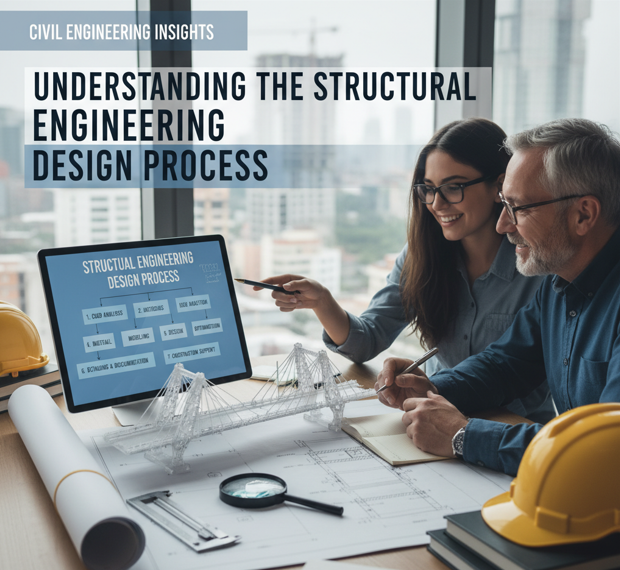
What is the Structural Engineer’s Main Job?
A structural engineer plays a crucial role in construction. They design a structure, like a building, bridge, or tunnel, that meets the client’s needs and satisfies the user. This means the final structure must be three things: safe, economical (cheap to build and maintain), and attractive. Safety is always the highest priority because the structure must handle all the forces it will face throughout its life, such as its own weight, the weight of people and furniture, wind, and even earthquakes.
Defining the Design Concept
Many people use the word “design” differently. For instance, architects typically think of design as creating drawings and models to show what a new building will look like visually.However, for civil and structural engineers, design means the entire planning process. This planning starts from the first rough ideas and feasibility studies. It continues through detailed mathematical calculations and ends with the final working drawings. These detailed drawings show every part of the project, including specifications, bills of quantities (lists of materials), and the legal contract. Together, these documents form the necessary framework that guides the contractor in building the structure under the supervision of the engineers and architects.
Key Inputs for the Structural Engineering Design Process
The design process is never a solo effort; it pulls in many different pieces of information to succeed.
- Client’s Request (Conceptual Brief): The designer usually starts with an idea from the client. This brief might be a simple sketch from a private developer or a detailed set of architectural drawings from a government body. It clearly defines what the client wants the structure to achieve.
- Experience: Experience is highly important. Clients always seek design firms that have successfully designed similar structures before, as past knowledge helps prevent errors and provides confidence in the outcome.
- Imagination: Although many people believe only architects need imagination, engineers need it too! A good engineer uses imagination to see how all the structural pieces fit and work together in three dimensions. We also use imagination to anticipate the different forces and loads the structure might face and to find clever, money-saving, or time-saving solutions to complex problems.
- Site Investigation: We must always investigate the site to understand the soil’s strength and other characteristics. This information is vital for designing the foundation, which supports the entire structure.
- Testing: If a structure is unusual or will carry exceptional loads, engineers may use small-scale models or laboratory tests. These tests help us accurately predict how the structure will behave under stress.
- Economic Factors: A structural designer must constantly consider the cost. We aim to use materials efficiently to keep construction costs low. However, we must also avoid over-complicating the design with too many different parts and sizes, which would increase labor costs. Ultimately, the goal is to produce a design that works well, saves on material, and keeps manufacturing and construction expenses down.
- Environmental Factors: Designers must ensure the structure fits well into its surrounding environment. Today, many projects depend on how they impact the environment. Therefore, part of the engineer’s job involves predicting and balancing the environmental concerns of the public and the government.
The Two Main Stages of Structural Design
We can generally divide the structural engineering design process into two major stages:
- Feasibility Study (Conceptual Design): In this first stage, engineers compare different structural shapes and systems. They then select the most suitable type for the project. The success of this early stage relies heavily on the engineer’s professional judgment and instinct, which they develop over many years of experience.
- Detailed Design: The second stage involves refining the chosen structure. While it still needs good judgment, this stage focuses more on applying a detailed understanding of building codes of practice (like BS 8110 or BS 5950). These codes are based on generations of engineering experience and research. They help ensure safety, construction economy, and prevent past mistakes from happening again. For example, codes changed after the collapse of the Ronan Point flats in London to ensure similar buildings could survive an event like a gas explosion.
We cannot stress enough the importance of paying attention to detailing and buildability in this process. Most structural failures happen because of poor detailing, not because the initial structural analysis was wrong.
For a more visual guide on the design steps, you can watch this explanation of the Basics of Structural Design. This video gives you an overview of the stages a structural engineer follows to create a safe and functional structure.
References
- Blockley, D. (1980). The Nature of Structural Design and Safety. Ellis Horwood.
- Brohn, D. M. (2000). Structural Engineering and the Role of the Structural Engineer. Spon Press.
- BS 8110. Structural use of concrete. British Standards Institution.
- BS 5950. Structural use of steelwork in building. British Standards Institution.
Leave a Reply