
Imagine you’re buying a piece of a large, intricate puzzle. You see the piece you want, but you need to be absolutely sure of its exact shape, size, and where its edges connect perfectly with the other pieces around it. When you buy a plot of land, the process is similar, and that’s where a land survey comes in.
A land survey is essentially a detailed measurement and mapping of a specific piece of property. It’s performed by a licensed professional called a land surveyor. While it might seem like just another item on the closing checklist, getting a survey is a critical step to understand exactly what you’re purchasing.
So, how do they actually do it? Let’s break down the process step-by-step in simple terms.
1. Digging into the Past: The Research Phase
Before a surveyor even sets foot on the property, they become detectives. Their first job is to gather all the existing information about the land. This includes:
- Old Deeds and Records: They review the historical legal documents that describe the property boundaries, sometimes going back many years. Think of this as finding the original instructions and descriptions for your piece of the puzzle and its neighbors.
- Previous Surveys: If the land has been surveyed before, they get copies of those old maps and notes.
- Other Documents: They look for records of easements (rights for others to use a part of the land, like a shared driveway or utility access) or other restrictions that might affect the property.
This research helps them understand the intended boundaries and find clues about existing markers on the ground.
2. Planning the Mission: Preparing for the Field
Armed with the historical data, the surveyor plans their fieldwork. They use the information gathered to get an idea of where the property lines should be and identify any old markers they need to find or verify (like iron pipes, concrete monuments, or even old stone walls mentioned in deeds). They map out the most efficient way to measure the property accurately.
3. On the Ground: The Fieldwork Begins
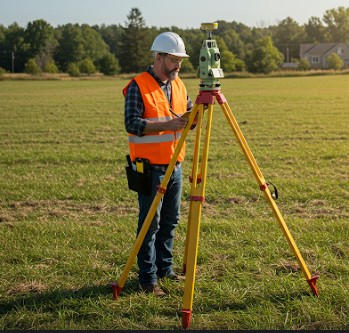
This is the part you might picture: surveyors out on the land with their equipment. They physically go to the property to take precise measurements and locate features.
- Finding Markers: They search for the boundary markers mentioned in the old documents. Finding these can be key to confirming the property corners.
- Taking Measurements: They use specialized tools to measure distances and angles with high accuracy. Common tools include:
- Total Station: An electronic device often on a tripod that uses a laser or infrared beam to measure distances and angles between points. It’s like a super-precise combination of a tape measure and a compass/protractor.
- GPS Receivers: More advanced than the GPS in your phone, these professional-grade units use satellite signals to pinpoint locations on the ground with much greater accuracy.
- Locating Features: They measure and record the position of existing things on the land, such as buildings, fences, driveways, utility poles, streams, or even large trees.
- Measuring Elevation (Sometimes): Depending on the type of survey needed, they might also measure the up and down slopes of the land to create a topographic map.
4. Bringing it all Together: Data and Drawing the Map
Back in the office, the surveyor takes all the measurements and observations collected in the field and inputs them into specialized computer software. This software helps them process the data and compare it to the historical records.
Based on this combined information, they create a detailed, scaled drawing of the property.
5. Solving the Puzzle: Resolving Boundary Lines
Sometimes, the measurements from the field don’t perfectly match the old written descriptions, or there are conflicts with physical features like fences. The surveyor uses their expertise, knowledge of surveying principles, and understanding of property law to analyze these discrepancies and determine the official boundary lines. This can be a crucial step in clarifying exactly where one property ends and the next begins.
6. Your Official Map: The Final Survey Document
The end result is a formal document, often called a Plat or Survey Map. This map is a legal depiction of your property, clearly showing:
- The precise length and direction of each boundary line.
- The location of all corners and markers (both found and newly placed).
- The position of buildings, fences, and other improvements.
- Any easements, setbacks, or other restrictions affecting the land.
- A written description of the property.
This document is then certified by the licensed land surveyor.
Why This Matters to You, the Buyer
Getting a land survey isn’t just a formality; it’s an investment in peace of mind. The survey ensures:
- You know exactly what you’re buying: It confirms the size and shape of the property matches the description in the sale contract.
- Clear Boundaries: You’ll know precisely where your property ends and your neighbor’s begins, helping prevent future disputes.
- Discovery of Issues: It can reveal potential problems like encroachments (where a neighbor’s structure is on your land) or unknown easements that could affect your plans for the property.
- Building & Permits: If you plan to build or make significant changes, you’ll need the survey to ensure your plans meet zoning rules and setback requirements.
In short, a land survey provides a clear, legal picture of the land you intend to own, protecting you from potential headaches down the road. It’s a vital step in turning that puzzle piece into your secure property.
Leave a Reply