
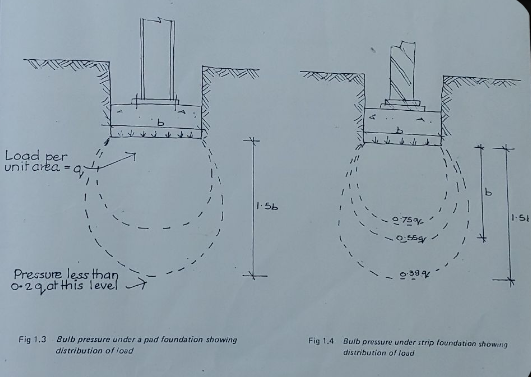
Imagine placing a heavy object on soft ground. The pressure from the object doesn’t just stay directly beneath it. Instead, it spreads out in a bulb-like shape, affecting the soil around it. This is called bulb pressure.
Why is Bulb Pressure Important?
Understanding bulb pressure is crucial in building construction. When we build structures, we need to ensure that the foundation can safely support the weight of the building. If the foundation isn’t strong enough, the building might sink or tilt.
Bulb pressure helps engineers determine the size and depth of a foundation. By analyzing the soil conditions and the load from the building, engineers can design a foundation that can distribute the weight effectively and prevent excessive pressure on the soil.
Key Points to Remember:
- Load Distribution: The load from a foundation spreads out in a bulb-like shape in the soil.
- Soil Stress: The pressure exerted by the foundation on the soil is called soil stress.
- Foundation Design: Understanding bulb pressure helps engineers design foundations that can safely support the building’s weight.
- Soil Type: The type of soil affects how the pressure spreads out.
Bulb pressure is a fundamental concept in soil mechanics. By understanding how load is distributed in the soil, engineers can design safe and stable foundations for buildings and other structures.
Leave a Reply